What Is Exhibition Design? Why It Decides Whether a Show Succeeds
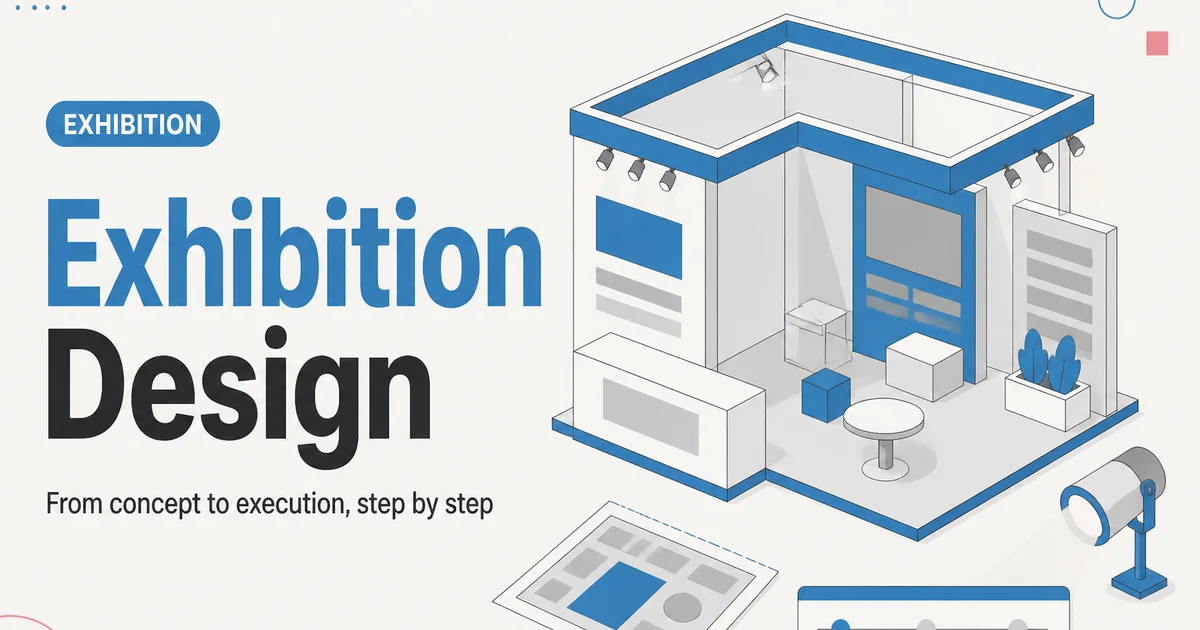
Exhibition design is the professional planning process that integrates brand messaging, spatial aesthetics, and visitor experience into one, directly shaping how long visitors stay, how willing they are to interact, and how well they remember the brand.
A successful exhibition is never just about arranging things nicely. It requires combining spatial flow planning, visual communication, lighting atmosphere, and interactive experience across multiple dimensions. According to EXHIBITOR Magazine, good exhibition design can increase booth dwell time by more than 40%.
The Howdy Creative team has long been involved in commercial exhibitions and cultural curation projects across Taiwan, and we understand firsthand how every stage of exhibition design shapes the final results.
- Six stages of exhibition design: requirements clarification, concept development, spatial flow, detailed design, construction supervision, teardown — a full cycle of about 2 to 6 months
- Typical costs: a 9-18 sqm commercial booth runs about NT$150,000-500,000; large custom-built booths or independent curated exhibitions start at NT$500,000-3,000,000, with design fees making up roughly 15-25%
- Five principles for results: theme focus, experience first, check-in-spot design, sustainable materials, data tracking
What Types of Exhibition Design Are There? Commercial vs. Cultural Exhibitions
Exhibition design falls mainly into two categories, commercial exhibition design and cultural exhibition design, which differ clearly in goals, budgets, and evaluation criteria.
Commercial Exhibition Design
Focused on brand exposure, product showcasing, and business development. The priorities are:
- Visual expression of brand identity (further reading: Exhibition Booth Design: A Budget and Conversion Playbook)
- Planning the product experience flow
- Designing the meeting area and reception process
- Deploying multimedia interactive installations
From chain-brand pop-up stores to regional revitalization markets, the spatial logic behind commercial exhibitions is actually highly consistent. Howdy Creative has built up a decade of hands-on market-curation experience, letting us bring a commercial-conversion mindset into every space planning project.
Cultural Exhibition Design
Centered on storytelling, emotional experience, and education outreach. The focus is on building spatial atmosphere, the logic of how exhibits are arranged, and controlling the pacing of the visit.
According to American Alliance of Museums, immersive experience design has become a mainstream trend in contemporary exhibitions.
Howdy Creative has also long partnered with universities and academic institutions on curation projects, such as a seven-year curation collaboration with National Yang Ming Chiao Tung University, translating research content into a spatial narrative that visitors can genuinely feel.
What Is the Complete Exhibition Design Process?
The exhibition design process consists of six stages: requirements clarification, concept development, spatial planning, detailed design, construction supervision, and teardown, with a full cycle of about 2 to 6 months.
Step 1: Clarifying Requirements and Setting Goals
Clarify the exhibition’s core objective, target audience, budget range, and venue conditions. This stage determines the direction of every design decision that follows.
Step 2: Concept Development and Key Visual Design
Propose the exhibition’s central theme and visual concept, including naming the exhibition, designing the key visual, planning the color scheme, and setting the overall style.
Step 3: Spatial Planning and Flow Design
Lay out the floor plan based on the venue’s dimensions. Flow planning is the stage in exhibition design that most requires experience — a good flow lets visitors move naturally through every zone without missing a single highlight.
Step 4: Detailed Design and 3D Simulation
Produce detailed construction drawings and 3D renderings, covering every detail from wall structures and lighting layout to booth dimensions and signage systems.
Step 5: Construction and On-Site Supervision
Work closely with the construction team to ensure the design is built to quality. The Howdy Creative team stays on site throughout to supervise and resolve issues in real time.
Step 6: Opening Operations and Teardown
A final check before the exhibition opens, and an orderly teardown once it closes. Planning for recyclable materials is also part of sustainable exhibition design.
How Do You Plan an Exhibition Flow That Never Falls Flat? 3 Practical Principles
Flow is the most underrated element in exhibition design. No matter how beautiful the space, if visitors can’t move through it smoothly or find a reason to stop, results take a direct hit. The following three principles come from Howdy Creative’s own curation experience.
Principle 1: The First 3 Seconds at the Entrance Decide Everything
Visitors decide whether to walk in within the first 3 seconds at the entrance. The entrance area should leave room to breathe, with just one key visual and one line of copy, so people instantly grasp what the exhibition is about. The most common mistake is cramming the entrance with information, which pushes people away instead.
Principle 2: Alternate the Pacing, High and Low
Between the main display zones, build in breathing spaces such as interactive installations, seating, or photo spots. Viewing an exhibition has a rhythm: giving visitors a moment to relax after dense information actually lengthens average dwell time. In our experience, the most common mistake in cultural and regional-revitalization exhibitions is pouring the entire budget into the entrance wall while rushing the end of the flow, which wipes out visitors’ impression right as they leave.
Principle 3: The Exit Is the Conversion Point
The area just before the exit is the best place to design a conversion point: scanning a code to join a community, leaving contact information, or buying a limited-edition item. Turning look-and-leave into stay-connected is what lets an exhibition’s value carry on beyond the show itself.
How Is Exhibition Design Priced? Budget Planning Advice
Exhibition design costs range from NT$50,000 to several million, depending on scale. A typical commercial booth (9-18 sqm) runs about NT$150,000-500,000 for design and construction combined, while large custom-built booths or independent curated exhibitions require NT$500,000-3,000,000 or more.
The cost structure typically includes design fees (roughly 15-25%), material costs, construction costs, equipment rental, and transportation.
For more on design-related costs, see The Complete Guide to Brand Design Fees。
How Do You Make Exhibition Design More Effective? 5 Practical Tips
Based on the Howdy Creative team’s curation experience, mastering five principles, theme focus, experience first, social amplification, sustainability, and data tracking, can significantly improve exhibition results.
- Theme focus:Deliver only one core message per exhibition, and avoid information overload
- Experience first:Design interactive experience moments that let visitors do it themselves or step into the scene
- Social amplification:Create photo-worthy check-in spots so visitors become brand ambassadors themselves
- Sustainability:Use recyclable materials to reduce environmental impact, in line with ESG brand strategytrends
- Data tracking:Design a quantitative tracking system for visitor numbers, dwell time, and interaction rates
Frequently Asked Questions About Exhibition Design
How far in advance should exhibition design preparation start?
For a typical commercial booth, we recommend starting at least 2-3 months in advance, covering the design proposal, construction drawings, and fabrication period. Independent curated exhibitions or large-scale special exhibitions need a full cycle of 4-6 months or more; if interactive installations or custom fixtures are involved, allow six months.
Can you put on an exhibition with a budget under NT$100,000?
Yes, but the strategy has to be right: use the organizer’s standard booth structure, concentrate the budget on one key visual and one memorable element (an interactive or photo installation), and use printed materials and lighting to fill in the rest. The worst thing to do with a small budget is spread it evenly; doing a little of everything means nothing stands out.
How Do You Choose an Exhibition Design Company?
Check three things: whether past projects show real spatial sense and not just flat visual appeal; whether the quote includes construction supervision and on-site problem-solving; and whether there’s a plan for teardown and material recycling. An exhibition is a one-shot, high-pressure project, so execution experience matters more than a pretty rendering.

Howdy Creative’s Exhibition Design Services
Howdy Creative provides one-stop exhibition design services from concept through execution. We specialize in turning brand stories into spatial experiences, making every exhibition a place for genuine dialogue between a brand and its audience.
Whether it’s a commercial exhibition, cultural curation, or a regional revitalization exhibition, feel free to contact us, and let’s create an unforgettable exhibition experience together.
Further reading:What Is Brand Design? The Complete Guide