Firelight Rediscovered: Turning a Vanishing Fishing Craft into a 'Boom!' of an Immersive Exhibition
Exhibition DesignStrategy & Planning
Peng-huo, torch-light fishing, is a century-old fishing method in Jinshan that is close to disappearing. We turned it into a roughly 60-minute immersive permanent exhibition, using sound, a motion-sensing game, and a food-education worksheet to help elementary school visitors go from hearing the story to catching the fish themselves.
Challenge
Peng-huo, torch-light fishing with a sulfur lamp, is a century-old fishing tradition unique to Jinshan's fishing village, and it has been fading as the fishing industry modernizes. Younger generations and visitors know almost nothing about it. Backed by a heritage preservation grant, the Jinshan Fishermen's Association wanted to translate this disappearing memory into exhibition content that ordinary visitors, elementary school students in particular, could understand and want to stay for, rather than a few explanatory panels on a wall.
Goal
Design a complete permanent exhibition within the association's existing space, built for elementary school visitors, that guides them through a four-stop route in about 60 minutes. The exhibition needed to deliver the physical jolt of the fire igniting, explain the cultural context of peng-huo fishing and the ecology of the sardines it targets, and send visitors home with a concrete memory of the experience, all while keeping the budget concentrated on a single standout interactive installation rather than spread thin.
Approach
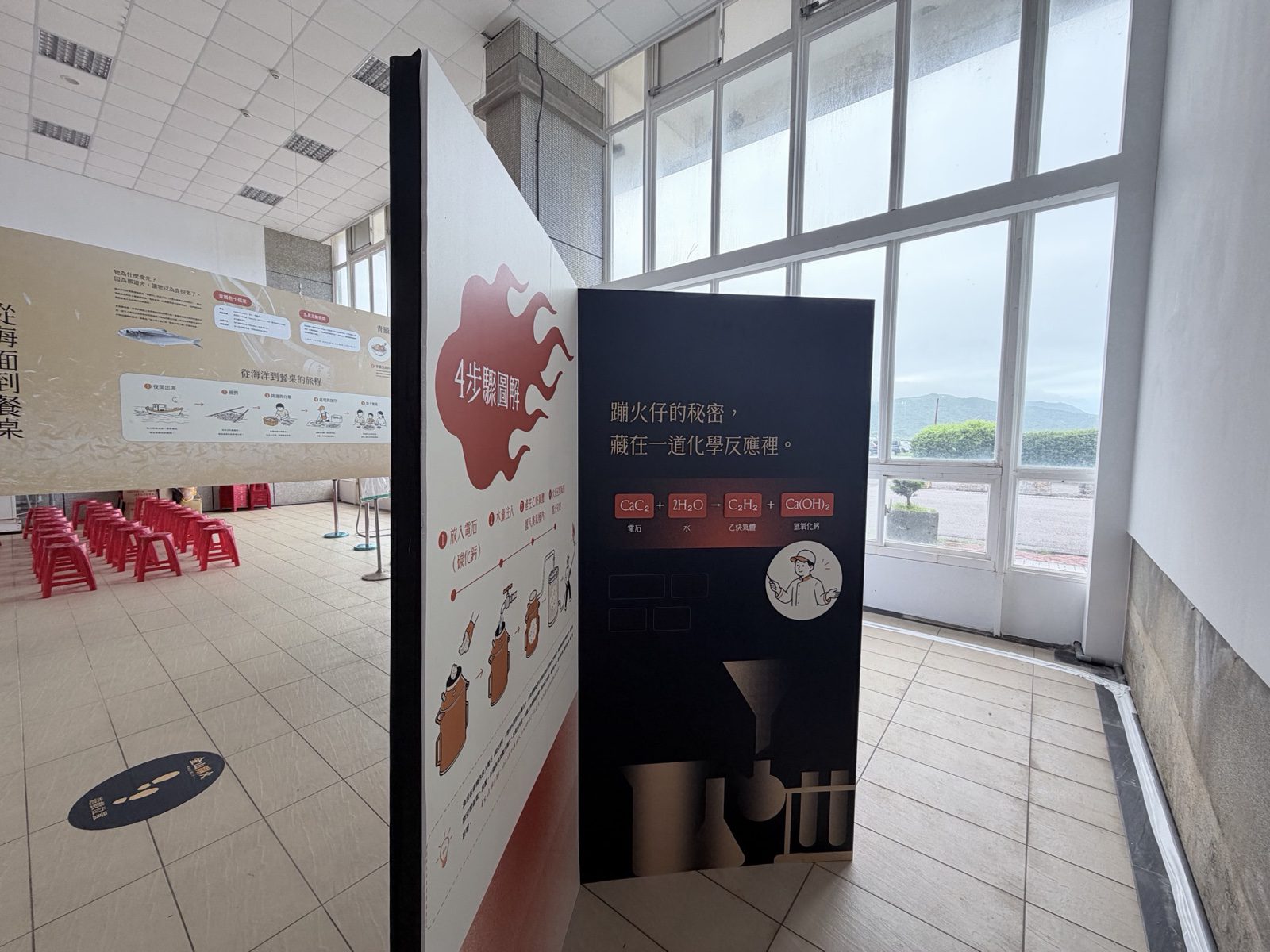
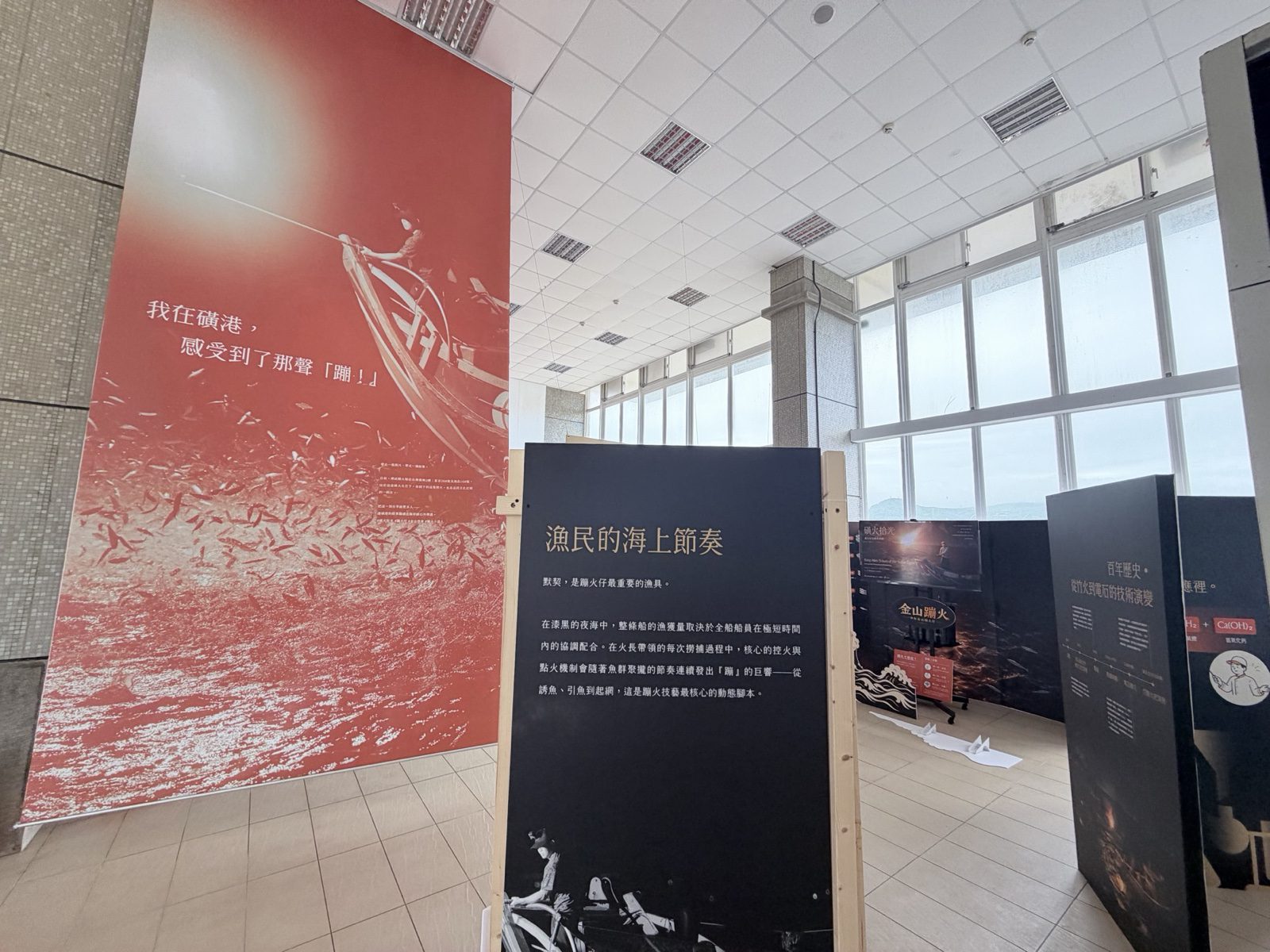
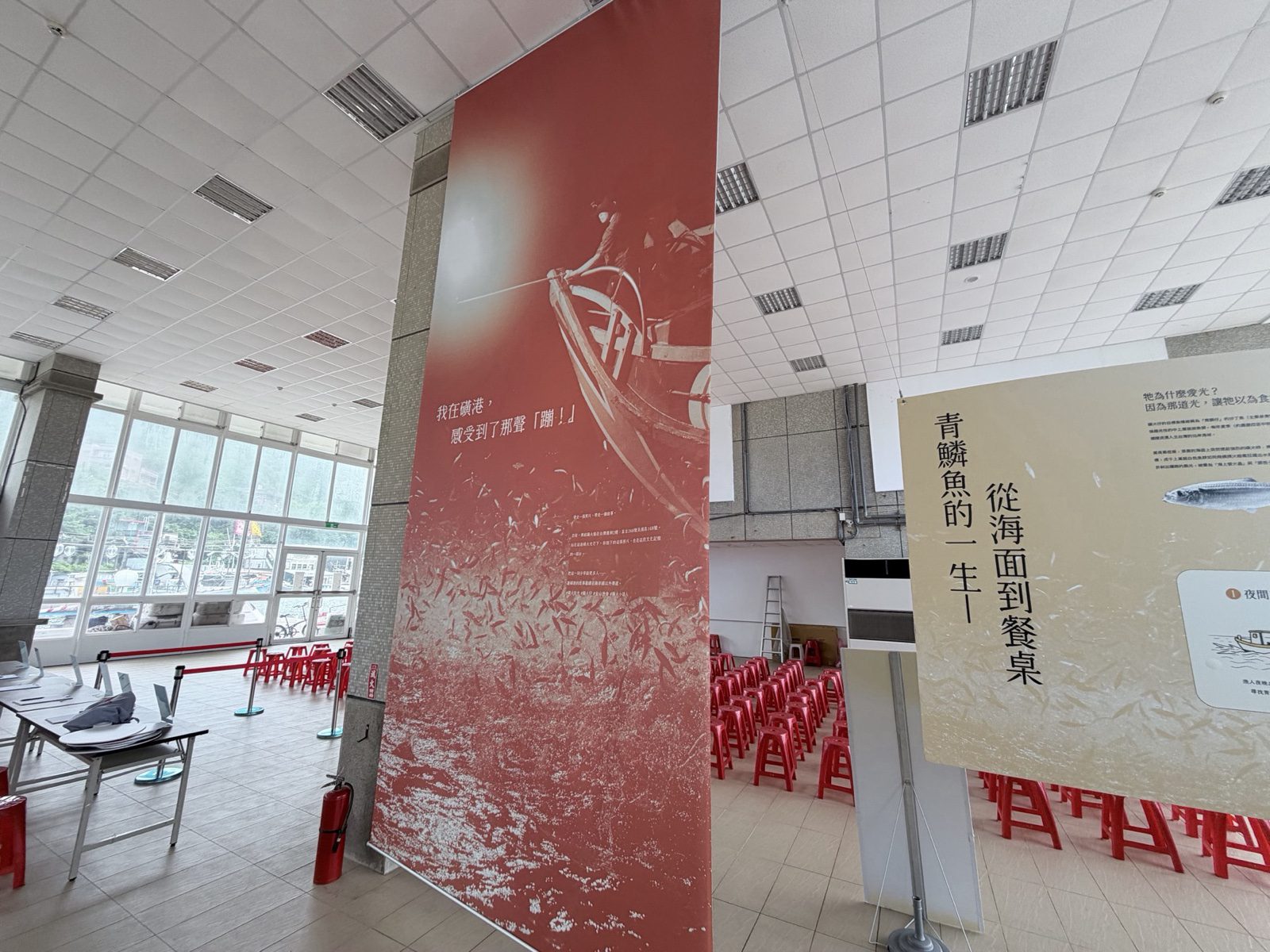
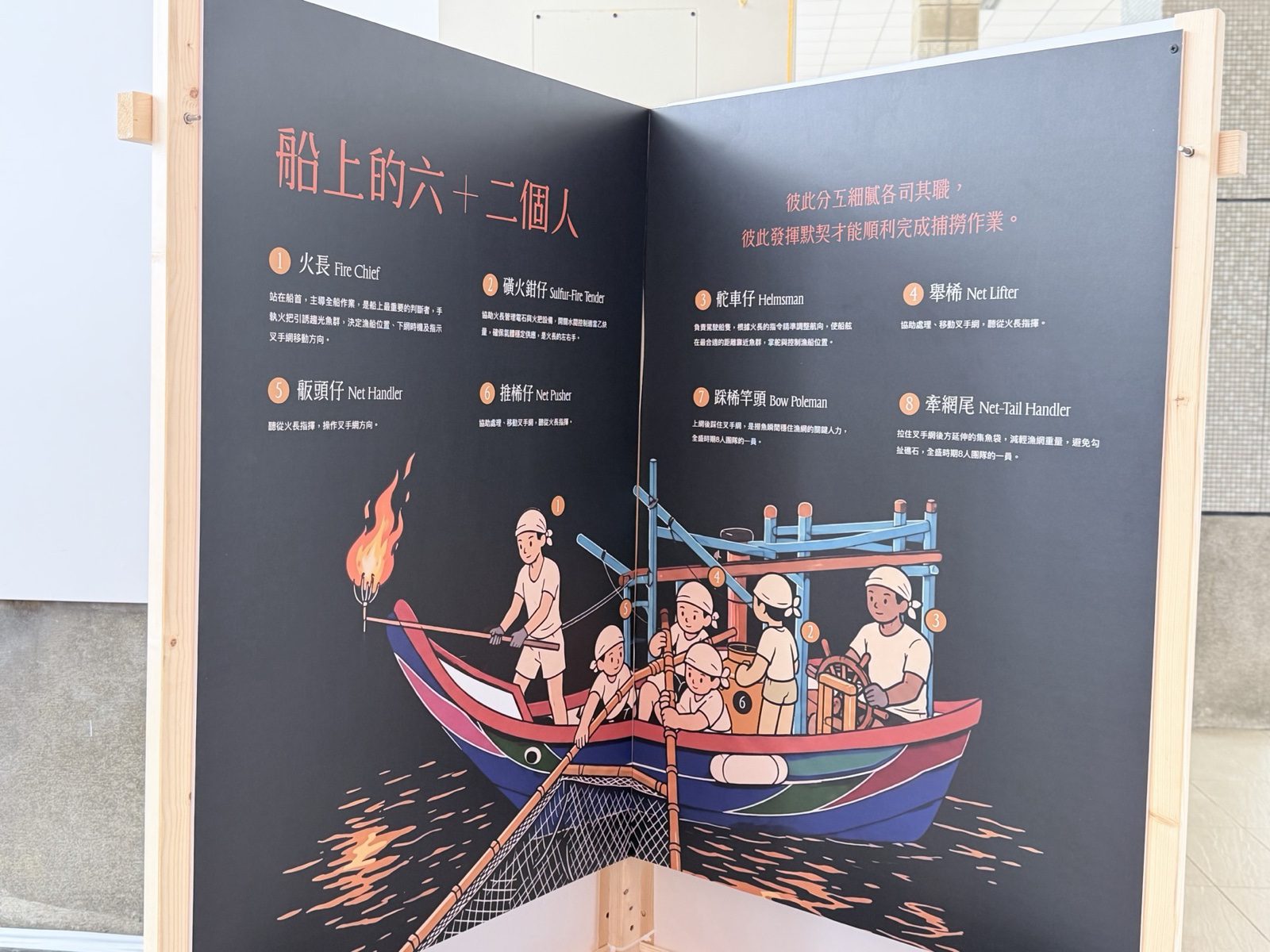
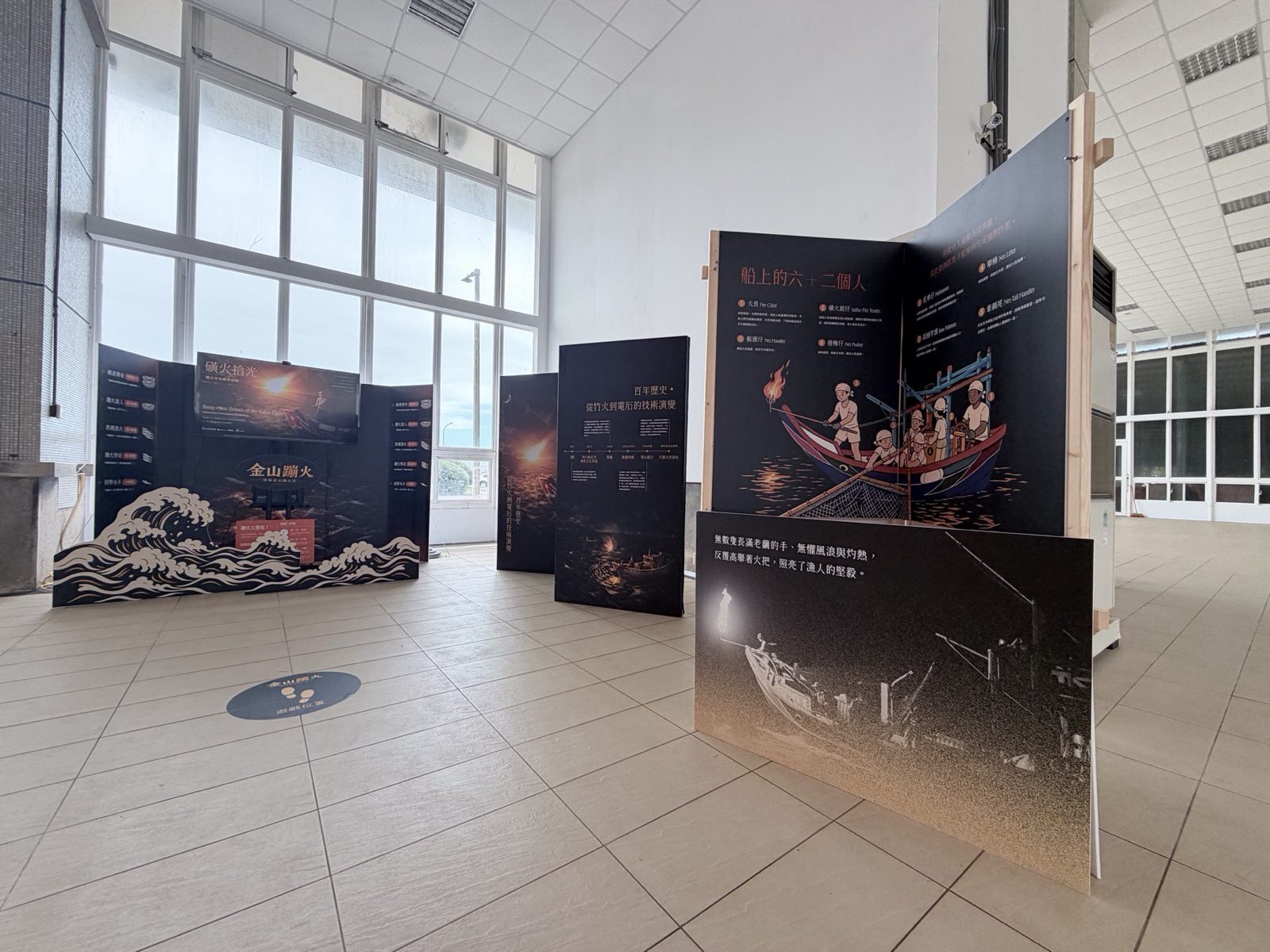
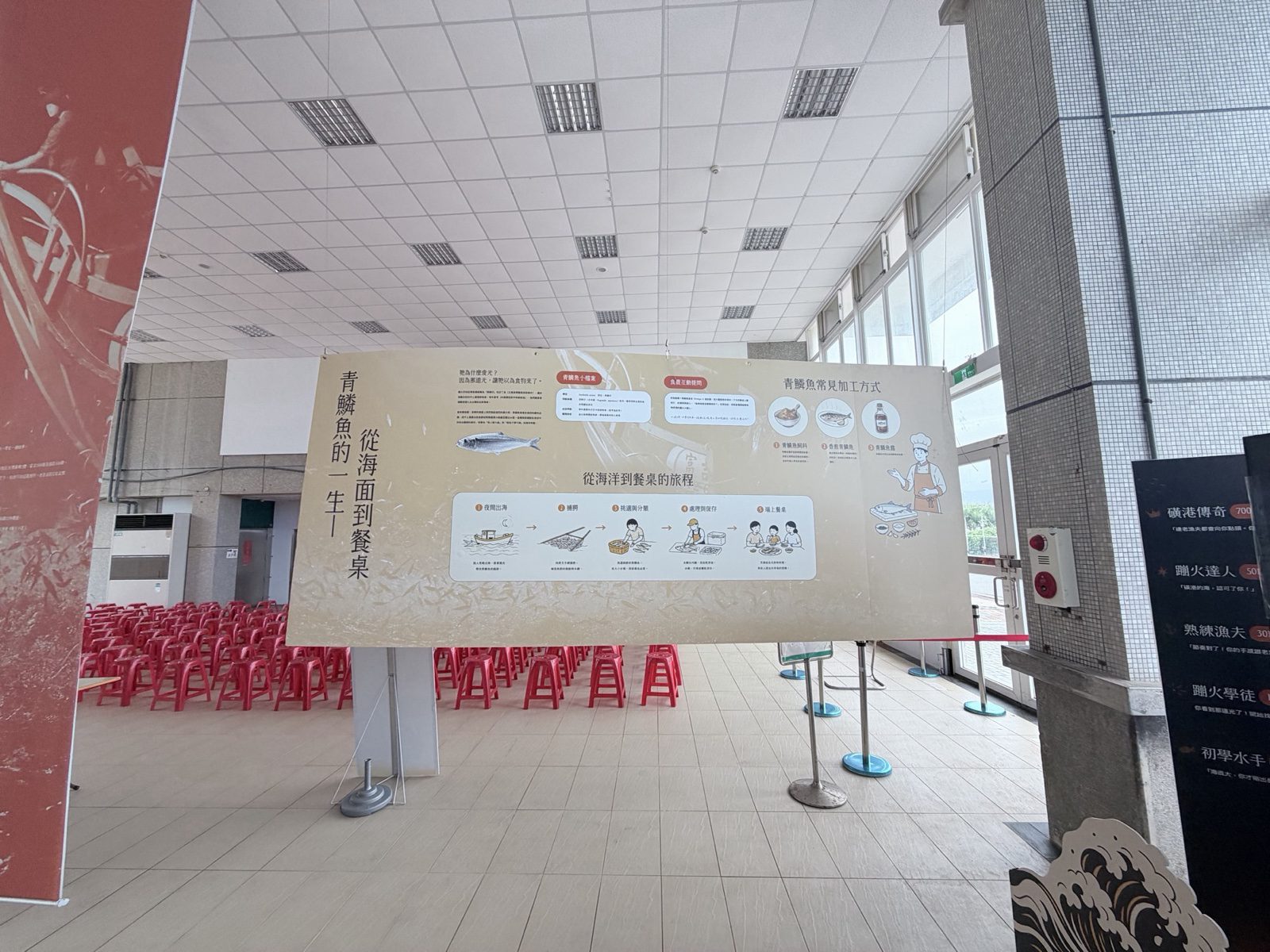
- Planned a four-stop route, an entry corridor, a knowledge corridor, a core interactive installation, and a food-education redemption area, opening with a headphone sound experience (waves, then engine, then the 'boom' of ignition) to deliver the first jolt before moving into panel-based knowledge and a motion-sensing fishing game.
- Designed a 'Peng-huo Junior Expert' worksheet that runs through all four stops, prompting kids to actively hunt for answers and complete tasks in exchange for a small prize, turning passive viewing into active exploration.
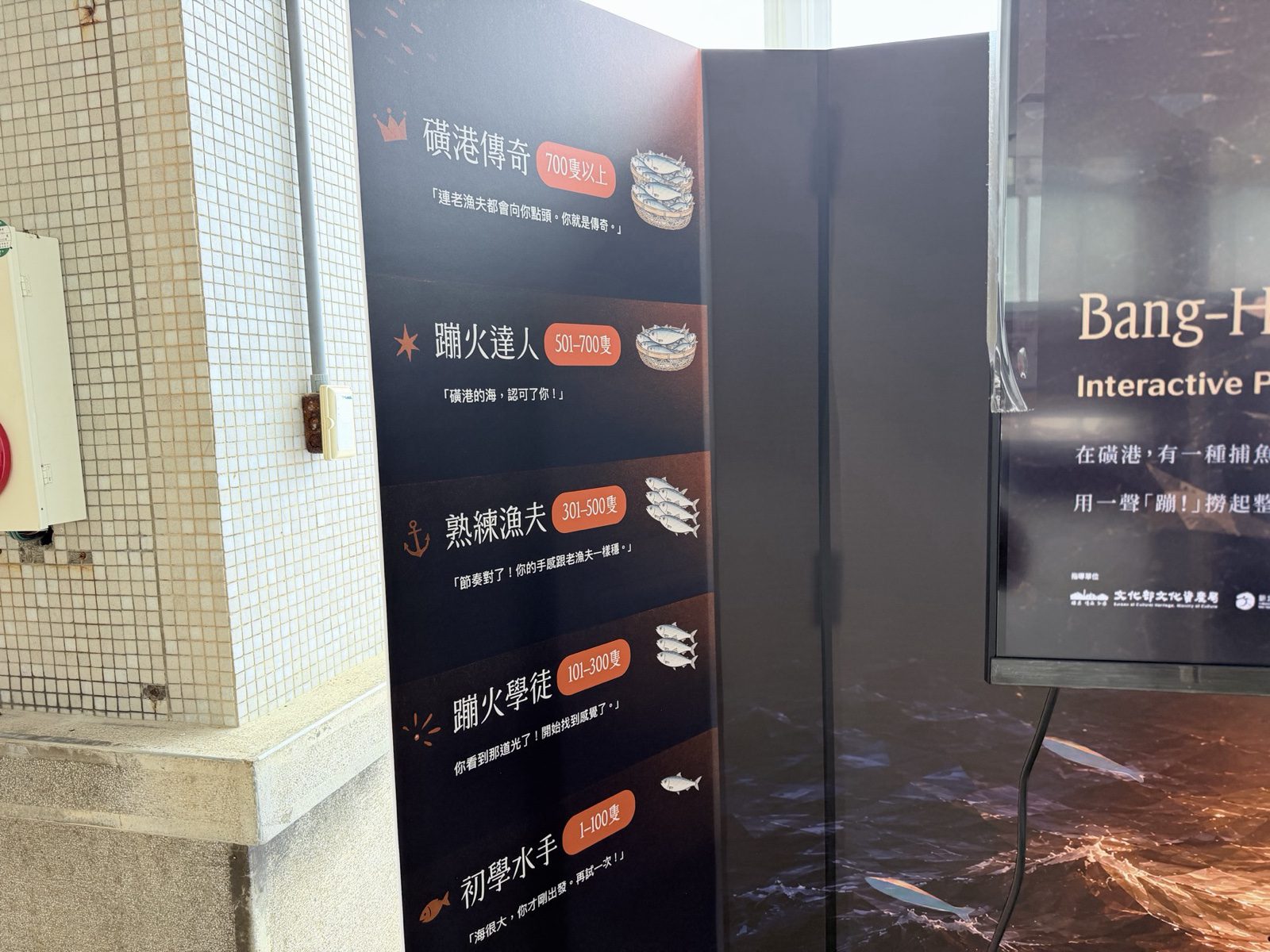
- Built a motion-sensing 'Peng-huo Bumper Harvest' interactive game using a suspended, movable rig instead of fixed built-in fixtures, to keep the budget in check while leaving room for future layout changes and letting the association's own staff maintain it.
- Worked with exhibition culture consultant Zhuo Ching-sung, cross-checking crew titles, the ignition sequence, and culinary details against original documents and picture books to keep every detail on the exhibition floor historically accurate.
Outcome
The exhibition completed installation and setup on July 31, 2026. The entry corridor's main visual panel, the knowledge corridor panels, the core interactive installation (the motion-sensing fishing game), and the photo wall are all in place, and the interactive installation has been tested with visitors. All six line items in the contract, planning and design, identity and panel visuals, panel production and printing, the exhibition script, on-site electrical work, and the interactive software, were delivered as specified, plus six bonus exhibition hand signs provided at no extra charge.
- Year2026
- ClientJinshan Fishermen's Association (新北市金山區漁會)
- ServicesExhibition Design、Strategy & Planning
- Topic地方創生